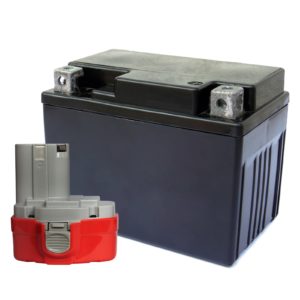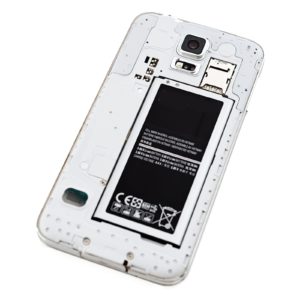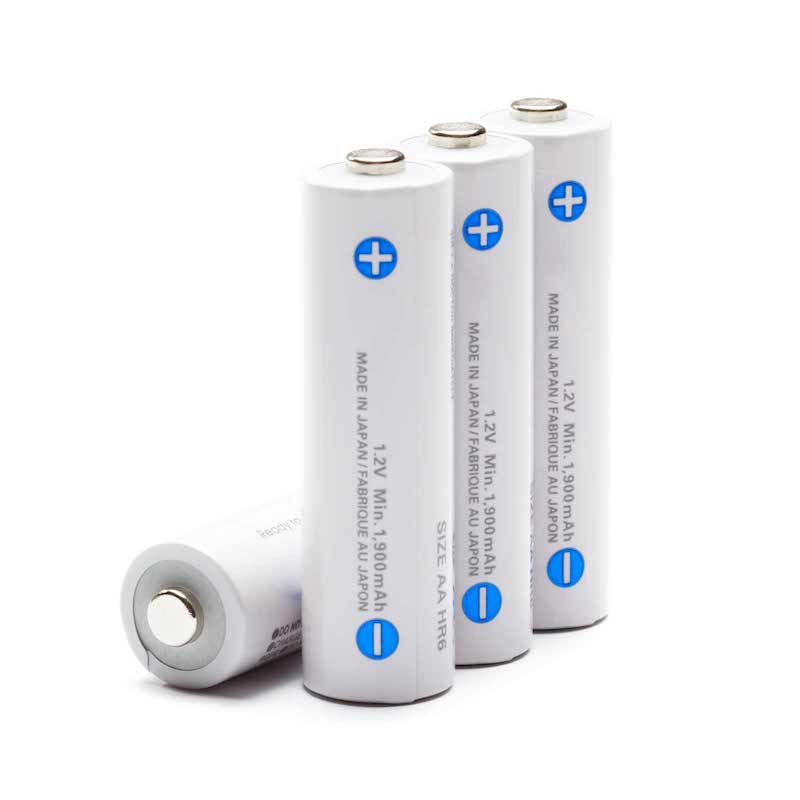
Household batteries include single-use and rechargeable batteries in a variety of sizes (AA, AAA, 9v, Lithium, Li-ion, Ni-Cd, Ni-Mh, & Ni-Zn). The use of rechargeable batteries is recommended to reduce the number of single-use batteries being disposed of each year.
While modern-day alkaline batteries no longer contain mercury and are classified as non-toxic by the Environmental Protection Agency, batteries are becoming increasingly difficult to distinguish from one another. Whenever possible, we recommend collecting all types of batteries, including alkaline and rechargeable batteries, for recycling at a specialized facility. Recycling all battery types enables the recovery of high-value metals, such as lithium, cobalt, and nickel, allowing for a second-life application in new electronics.
ATTENTION
- Batteries should never be put in your curbside recycling, drop-off recycling container, or trash. They can cause fires at the recycling and landfill facilities and put workers at risk.
HOW TO PREP BATTERIES FOR RECYCLING
- Rechargeable batteries (lithium, lithium-ion, nickel-cadmium and nickel-metal hydride) should be bagged or taped while storing or transporting them to a recycling facility.
- Option 1: Tape the terminals with clear packing tape or nonconductive electrical or duct tape, keeping the label visible.
- Option 2: Bag each rechargeable battery individually in a clear plastic bag before placing it in a storage container.
- Alkaline batteries do not need to be taped or bagged. They do not start fires.